
AI and the Retail Marketer’s Future
How AI transforms strategy and processes, driving the adoption of Positionless Marketing
Read time 5 minutes


Become a CRM Marketing powerhouse

Customer intelligence (CI) is the collection and analysis of detailed customer data in order to understand the best ways to interact with each individual customer. In today’s digital-driven world, customers share information about themselves every time they interact with your business: their interests, their demographic details, their preferences, their needs, their wants.
Marketers who find ways to use this goldmine hiding in their customer data are able to communicate with each customer in ways that make every customer feel understood, appreciated and valued. This, in turn, generates goodwill, enhanced brand perception, word-of-mouth promotion and, of course, long-term customer loyalty.
It’s not an exaggeration to say, in this age of intense online competition and messaging overload, that mastering customer intelligence is necessary to enable any company to successfully compete – and thrive.
Watch the mini-workshop below or read the transcript here to learn why you need customer intelligence.
Huge amounts of customer data flow into your company across numerous channels, including customer activity on your website and/or your app, purchase (and return) patterns, customer-initiated communications, and customer responses to previous company-initiated communications. The first building block of successful client intelligence is thus the ability to efficiently collect all of this information into a single repository that enables you to examine it and analyze it. This is also known as a “360-degree customer view” or a “single customer view.”
The second element is the technological infrastructure necessary to analyze the data to discover actionable insights. At the simplest level, this means the ability to divide your customers into some high-level groups, perhaps based on lifecycle stage (e.g., trial, new, active, churn) or RFM (recency, frequency, monetary). Modern client intelligence systems, however, allow marketers to dive far deeper into their customer data, revealing dozens or hundreds of individual “customer personas” that enable large-scale, granular personalization. Some of the technologies that enable this level of customer intelligence include customer behavior modeling, customer lifetime value forecasting, dynamic micro-segmentation, predictive customer analytics and machine learning.
The third pillar of successful customer intelligence is the ability to take effective action on the basis of your analysis, across any number of customer personas, via any number of communication channels – and to measure the results of every action in order to optimize future marketing actions. This means linking your CI system to an automated campaign scheduling/testing/optimization engine so that you can orchestrate personalized, contextual interactions that your customers will find relevant, pleasing and valuable. Because without streamlined actionability and a methodology for constantly improving your customer model and results, the output of your customer data analysis will be limited in its usefulness.
With a well-executed CI backbone in place, you will be able to shift all of your customer interactions to be data-driven and highly personalized. This, in turn, will generate increased customer satisfaction, loyalty, spend and retention, leading to both short-term and long-term increases in your most important customer KPIs. There is no better way to gain both detailed and holistic views of your customers and how you communicate with them.
Another way of thinking about this is that you will be able to cater to every stage of an infinite number of unique customer journeys. This level of customer understanding will end up delighting each customer and promote very strong brand affinity. There is no better way to build strong relationships and prevent churn than by affirming and acknowledging that you “get” what is important to each and every customer.
An additional aspect of CI done right is the total visibility it gives you into how your marketing efforts are performing – as a whole, per campaign/offer, per marketing channel, per lifecycle stage, per customer persona, and so forth. There is no substitute for this level of measurement and insight if you succeed at constantly improving and optimizing your customer marketing efforts.
There are countless ways that marketers can use CI to personalize communications with customers and improve the customer experience. Here are just a few illustrative examples:
Optimove is a Relationship Marketing Hub that combines the most advanced client intelligence technologies with an automated customer marketing orchestration platform. In a nutshell, Optimove helps marketers implement a systematic approach to planning, executing, measuring and optimizing a complete, highly personalized customer marketing plan.
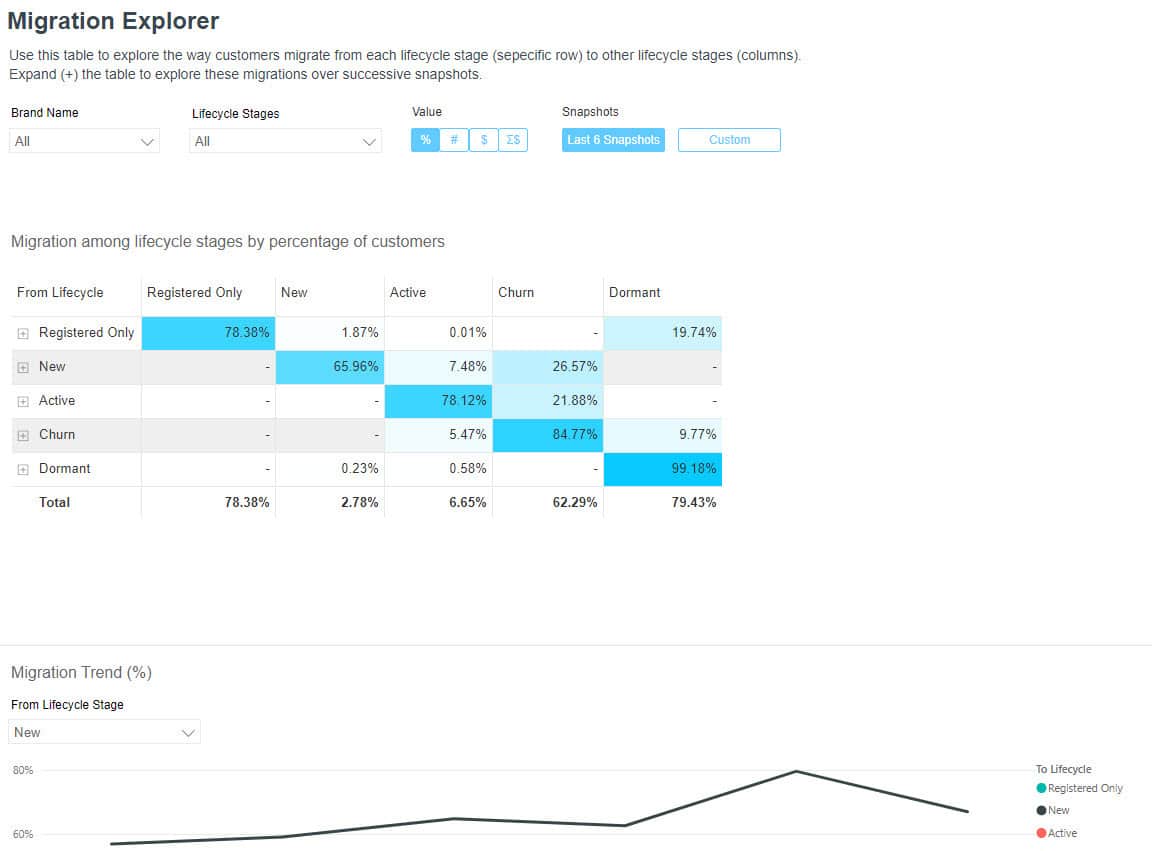
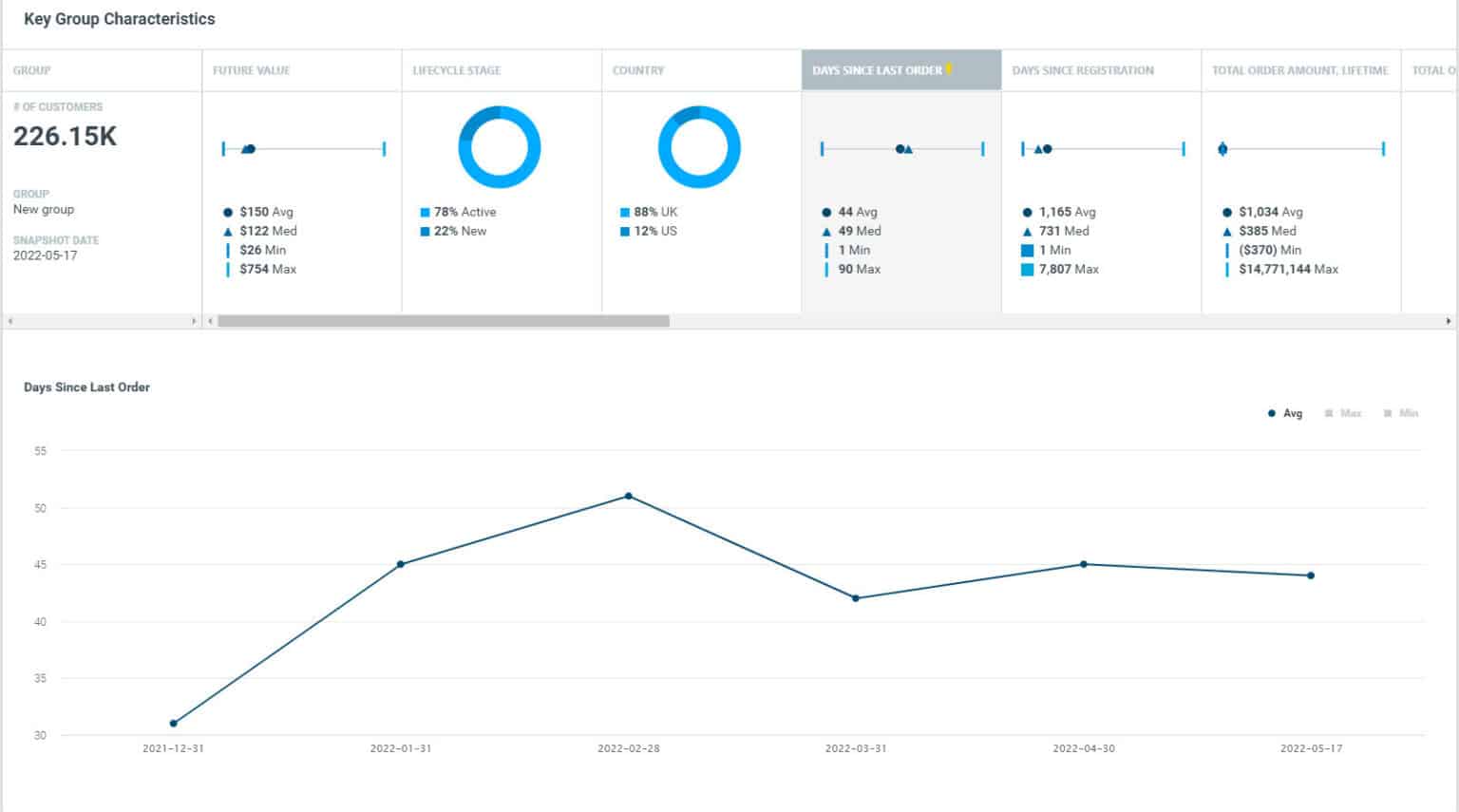
Visit the Optimove Product page or request a Web demo to learn how you can use Optimove’s customer intelligence software to achieve cutting-edge customer intelligence and to automate a complete system of highly personalized customer marketing activities.
The CRM Marketer Evolution Curve’s Guide
The CRM Marketer Evolution Curve’s Guide. Learn 5 stages of a marketer’s evolution. Discover your level and how to advance.